Sunday after Christmas
31 December 2023 – Today is Sunday after Christmas, and Bach wrote 3 cantatas for that day, one in Weimar and two early Leipzig works.
Tritt auf die Glaubensbahn, BWV 152, is an early Weimar cantata from 1714, when Bach was just appointed as Konzertmeister, which brought the obligation to write a monthly cantata. This cantata, like several other Weimar cantatas, is scored for the more minimal, chamber music-like setting of the Weimar court.
Das neugeborne Kindelein, BWV 122, is a choralcantata from his 1724 cantata cycle. Gottlob! nun geht das Jahr zu Ende, BWV 28, gives thanks for the past (prosperous) year and hopes for equal fortune in the new year.
You may wonder why there is no part of the Weihnachtsoratorium for this day, effectively creating a break in the sequence? The reason seems simple to me: the Weihnachtsoratorium was written and performed for the Christmas season of 1734-1735. As Christmas fell on a Saturday in 1734 (thank you, internet), the Sunday after Christmas is as well the second day of Christmas (December 26), and on that day he performed the second part of BWV 248, the Weihnachtsoratorium. So in 1734 there was no separate Sunday after Christmas to celebrate.
Music for today
- Tritt auf die Glaubensbahn, BWV 152
(first performance 30 December 1714, Weimar period) - Das neugeborne Kindelein, BWV 122
(first performance 31 December 1724, Leipzig period) - Gottlob! nun geht das Jahr zu Ende, BWV 28
(first performance 30 December 1725, Leipzig period)
Playlist
WBC08-Sunday after Christmas

Choose one of these streaming services to listen to this playlist:
Image of the day
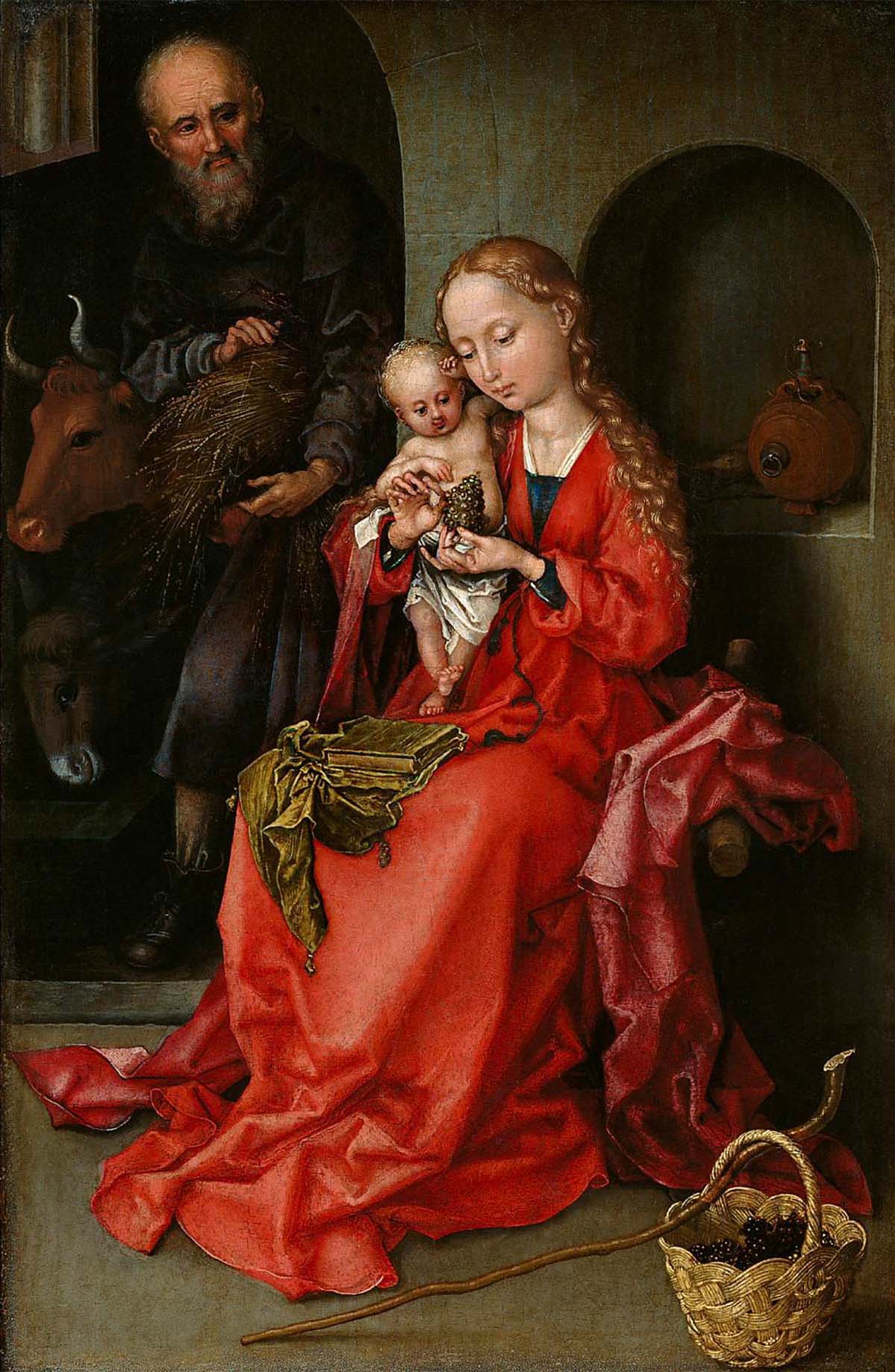
The Holy Family, a painting from around 1480/1490 by Martin Schongauer (around 1440/45 Colmar - 1491 Breisach), Kunsthistorischen Museum Wien (Vienna).
Painting suggested to me by website subscriber Jennifer.